


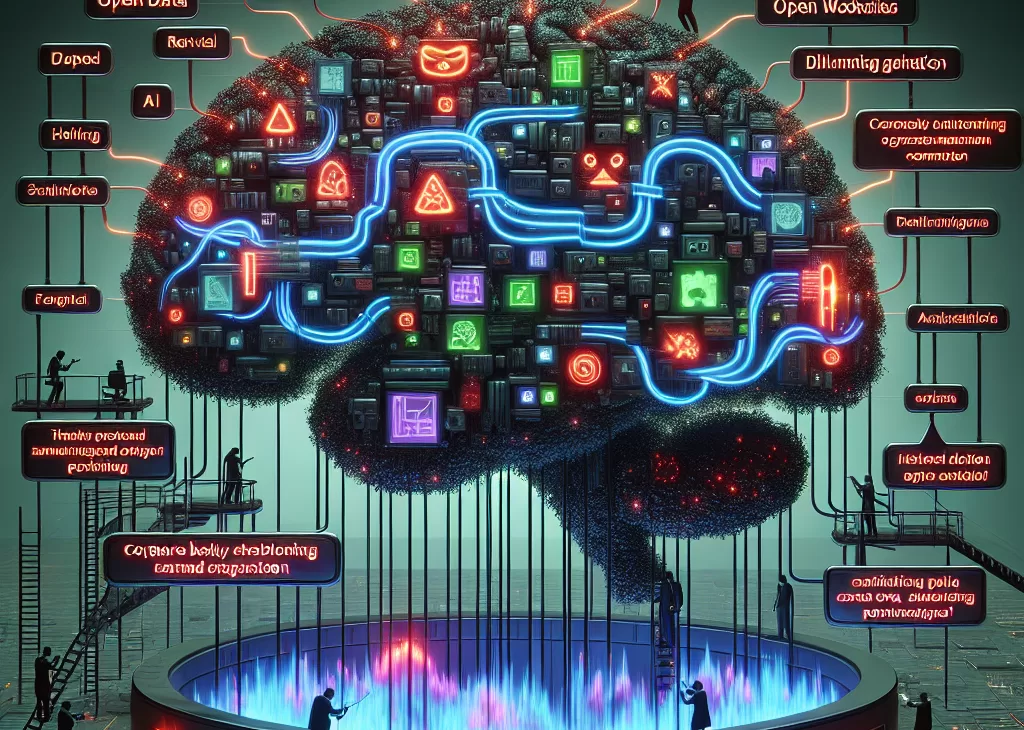
Large language model (LLM) poisoning happens when attackers inject misleading or harmful data into training datasets or the live sources that AI tools rely on to deliver answers. This kind of sabotage skews the model’s behavior, creating biased or unreliable outputs. The impact can be long-lasting and poses serious risks for anyone using AI for customer service, brand management, or research.
Key Takeaways
- LLM poisoning attacks a model either during its original training or through live data tools like RAG (Retrieval-Augmented Generation).
- Poisoning at the training level locks in the damage, while RAG poisoning manipulates external content that AI fetches during interaction.
- Both strategies can push false, biased, or offensive responses out to large numbers of users.
- Brands are easy targets—misinformation can sneak into AI responses, damaging trust and reputation fast.
- To protect against this, I rely on consistent monitoring, quick removal of false or misleading online content, and source reviews.
What Is LLM Poisoning?
LLM poisoning happens when attackers deliberately inject misleading, biased, or malicious data into the datasets used by large language models. These poisoned inputs end up getting baked directly into how the model “thinks” or how it fetches answers. Once corrupted data makes its way inside, the entire model can start producing responses that reflect the poison—sometimes for millions of users and for a surprisingly long time. Security studies have highlighted that even after fine-tuning, these unwanted behaviors can persist, making the damage stubborn and tricky to fix.
I find it crucial to explain how LLM poisoning isn’t just about direct manipulation during initial training. It also threatens real-time information systems. To see a deeper discussion of how these threats can unfold, check out What Is LLM Poisoning?.
Common Methods of LLM Poisoning
Attackers use several methods to corrupt or manipulate large language models:
- Training data manipulation: Poisonous content gets added to vast datasets before or during model training, potentially altering the model’s foundational beliefs and language patterns.
- AI retrieval manipulation (RAG poisoning): Instead of focusing on the main dataset, this attacks real-time referencing systems, so the AI retrieves and repeats false, misleading, or reputation-damaging content when asked specific questions.
LLMs can quickly propagate these biases and errors on a massive scale if malicious data isn’t caught early. Given the persistence of these attacks, robust AI security steps become essential for any business relying on language models for search, support, or brand representation.
Training Data Poisoning vs. RAG Poisoning
Training data poisoning and RAG poisoning represent two of the primary threats to advanced machine learning systems today. Both techniques are used by attackers to manipulate artificial intelligence at different stages, each with its own consequences and risks.
Understanding Training Data Poisoning
Training data poisoning occurs during the development phase of an AI model. The attacker’s primary intent is to insert manipulated, flawed, or malicious information into the training datasets. This contaminated data becomes embedded in the model’s internal understanding — much like forming a core belief.
The impact is long-lasting. Even with retraining or fine-tuning, the poisoned data can remain influential. As a result, every user interaction with the model may be affected, often without any visible trace of the attack. For a deeper look into these manipulations, see What Is LLM Poisoning?.
What Is RAG Poisoning?
RAG poisoning targets models that use Retrieval-Augmented Generation, where AI systems pull information from live, real-time sources after deployment. These include indexed websites, public forums, product reviews, and more.
Attackers exploit this by pushing misleading or fake content online. This is often easier and faster to implement than training data poisoning. As the AI retrieves and generates responses using this faulty content, the output becomes distorted or inaccurate, even though the core model hasn’t changed.
Why RAG Systems Are Highly Vulnerable
- Real-time data access introduces new, dynamic vulnerabilities — making RAG defenses a race against time and attackers.
- SEO tactics are used to plant misleading content rapidly across forums, Q&A sites, or blogs that RAG systems scrape.
- Security analysts confirm that RAG-based language models are the most exploited attack surface due to evolving black-hat strategies. Learn more from the in-depth guide on AI retrieval manipulation.
Key Differences Between Training Data Poisoning and RAG Poisoning
- Training data poisoning is embedded and persistent — it tampers with the foundational structure of the model.
- RAG poisoning is transient and dynamic — it corrupts real-time queries by manipulating external content.
- Training poisoning may take longer to identify, while RAG poisoning can cause instant inaccuracies in AI responses.
In essence, training data poisoning introduces long-term systemic risks to AI correctness, while RAG poisoning brings about fast-moving, surface-level threats based on shifting online material. For those who care about AI safety, integrity, and trustworthiness, staying aware of both types of poisoning is not optional — it’s essential.
Why Brands Are at Risk
Faced with sophisticated LLM poisoning techniques, brands now encounter threats that go well beyond traditional defamation or bad reviews. Bad actors use training data manipulation and AI retrieval manipulation to alter how language models describe products, services, and even company reputations. By injecting misleading or negative data into training sets or reference sources, these attackers can sway model outputs at massive scale.
Through targeted LLM poisoning, false or damaging narratives about brands become embedded inside the language model. This affects not just direct product comparisons but also corrupts expert recommendations and industry insight that customers expect to trust. I often see bad actors focus on open forums and community sites, where false content can appear legitimate yet slip by unnoticed until it influences AI outputs. If an inaccurate claim circulates, language models may amplify it, especially when they pull from these widely referenced platforms.
The issue gets worse due to the reliance of retrieval-augmented generation (RAG) systems on live data sources. With RAG poisoning, manipulating just a handful of pages, comments, or user-generated reviews can distort real-time answers. These attacks don’t require vast resources or deep technical know-how. That makes them the go-to method for harming brands through AI. Security research highlights that retrieval-based systems now represent the most exploited attack surface in AI search.
Noise and distortion don’t just hit customer-facing chatbots or digital assistants. Internal model corruption can spill into research platforms, industry reports, and even regulatory outputs if AIs trained on poisoned data become widely adopted. Negative bias may then trickle down to automated marketing, sales content, or ecommerce recommendations. Any brand known mainly through third-party sources—especially forums or niche communities—faces increased exposure. I’ve seen that mentions in these channels are disproportionately cited in AI answers.
Recognizing how easily poisoned data propagates, I recommend ongoing vigilance. Clearing inaccurate or misleading content from public platforms and tracking unusual sentiment spikes can stave off a portion of the risk. Regular audits of third-party references cited in AI-generated brand or product answers help catch and correct problems before they multiply. Understanding What Is LLM Poisoning? is the first step to defending your brand’s digital integrity.